US Map / County Maps / Vermont
Vermont County Map
Vermont's counties are run by two elected judges apiece, and one county keeps two shire towns because two villages would not give way.
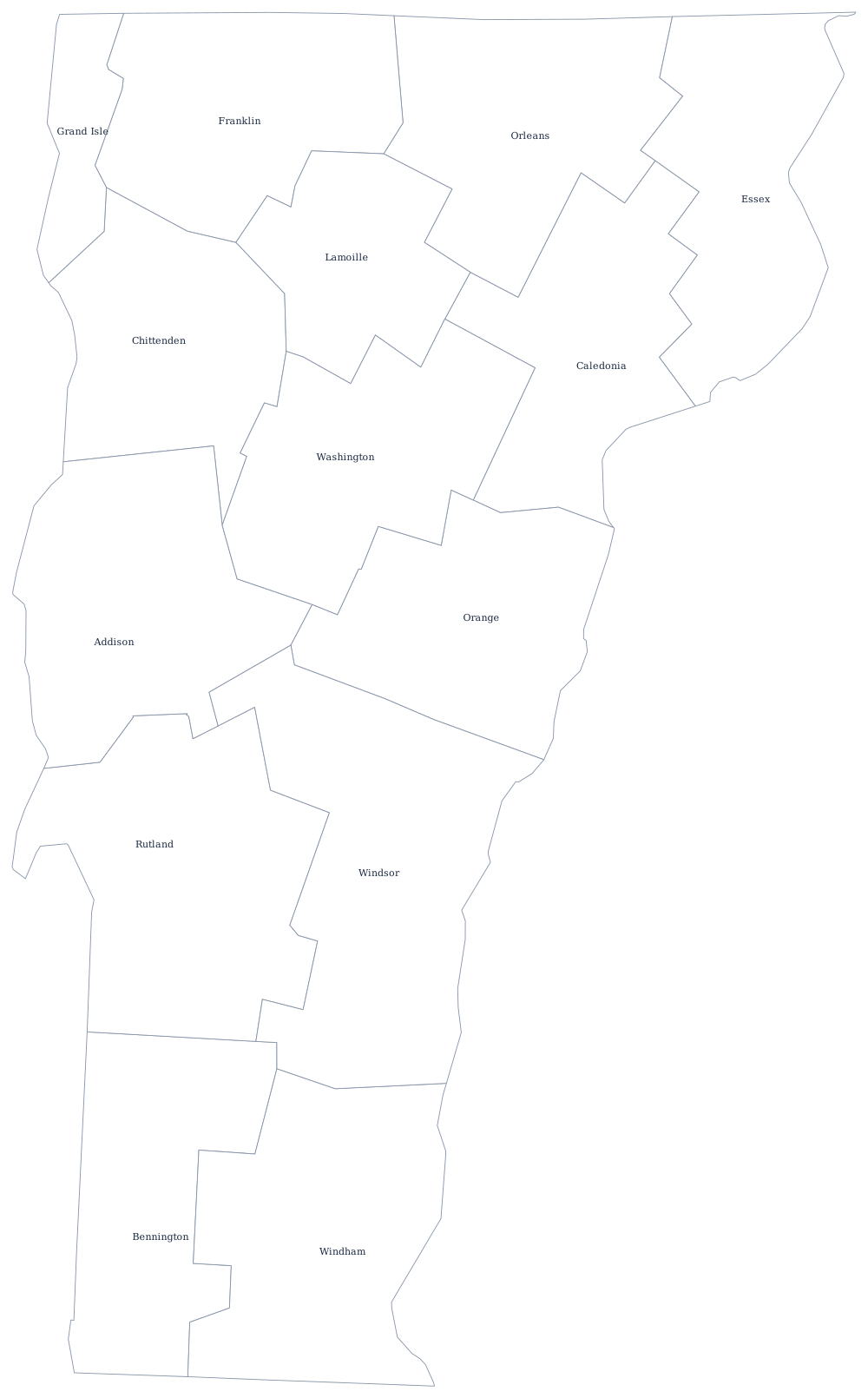
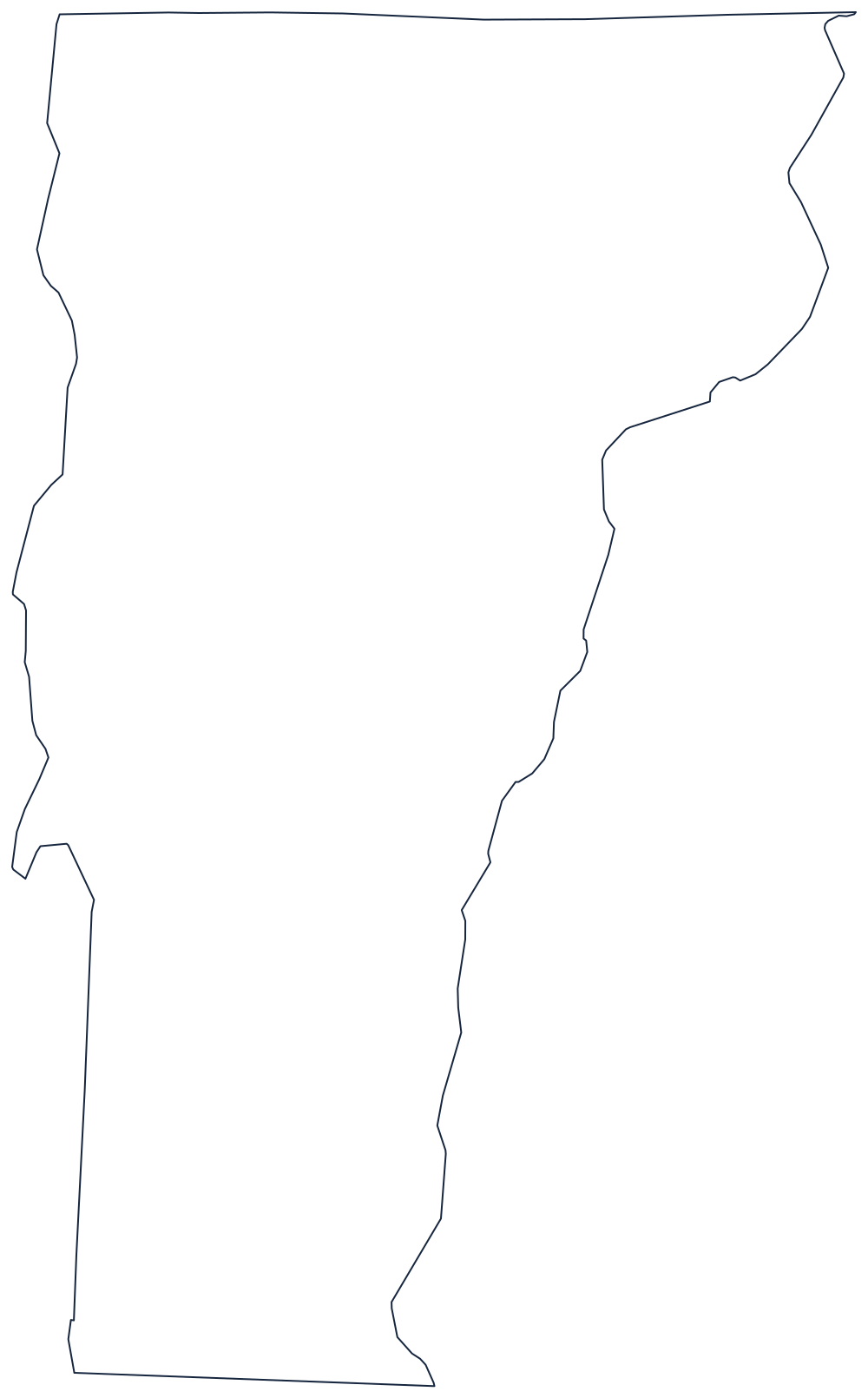
Vermont's first two counties, Bennington and Cumberland, were created in 1778 by a republic that no other government recognized. The rest were split off as settlement moved north up the Connecticut River and the Champlain valley, and the last, Lamoille, was made in 1835. Like the rest of New England, Vermont calls a county seat a shire town — and Bennington County has two of them, Bennington and Manchester, a half-shire arrangement from 1781 that nobody has ever undone.
The 14 counties of Vermont
Chittenden County, which contains Burlington, holds 26% of Vermont — more than the next three counties together. The ten below come to 90% of the state.
| County | Shire town | Population (2024 estimate) |
|---|---|---|
| Chittenden County | Burlington | 170,851 |
| Rutland County | Rutland | 60,198 |
| Washington County | Montpelier | 59,844 |
| Windsor County | Woodstock | 57,697 |
| Franklin County | St. Albans | 51,066 |
| Windham County | Newfane | 45,627 |
| Addison County | Middlebury | 38,047 |
| Bennington County | Bennington and Manchester | 37,039 |
| Caledonia County | St. Johnsbury | 30,535 |
| Orange County | Chelsea | 30,050 |
Assistant judges, and a county with almost no budget
Vermont counties have no council, no commission, and no executive. What they have is two assistant judges, elected county-wide and universally called side judges, who sit with the presiding judge in some civil and family cases and who, out of court, are the county's governing body: they maintain the courthouse, hire the county clerk, and set a county tax that the towns pay. It is one of the last surviving lay-judge offices in the United States, and periodic proposals to abolish it have never passed.
The remaining county officers are a sheriff, a state's attorney, and a high bailiff whose only real function is to arrest the sheriff if the sheriff needs arresting. Everything else belongs to Vermont's 237 towns and 9 cities, which run the schools through supervisory unions, the roads, the listers who assess property, and the town meeting each March that votes the budget. A Vermont county budget is typically a few hundred thousand dollars — smaller than that of many towns inside it.
Largest and smallest counties
Chittenden County is the most populous at 170,851 in the 2024 estimates and contains Burlington, the state's only city over 40,000. Rutland County is second at 60,198. The smallest is Essex County in the Northeast Kingdom on the Canadian border, 6,037 people in country that is almost entirely working forest — one of the least populous counties east of the Mississippi. Windsor County, along the Connecticut River, is the largest by land area at about 970 square miles.
The Vermont state page covers the Green Mountains and the Champlain valley, and the county map index covers the whole country. Its neighbors: New Hampshire, whose counties are governed by state legislators, New York, and Massachusetts. The New England region page explains the town meeting that made all of this possible.